Advanced Spaceflight Laboratory Features
Student Interfaces (Controls and Experiments)
Flight and Engineering
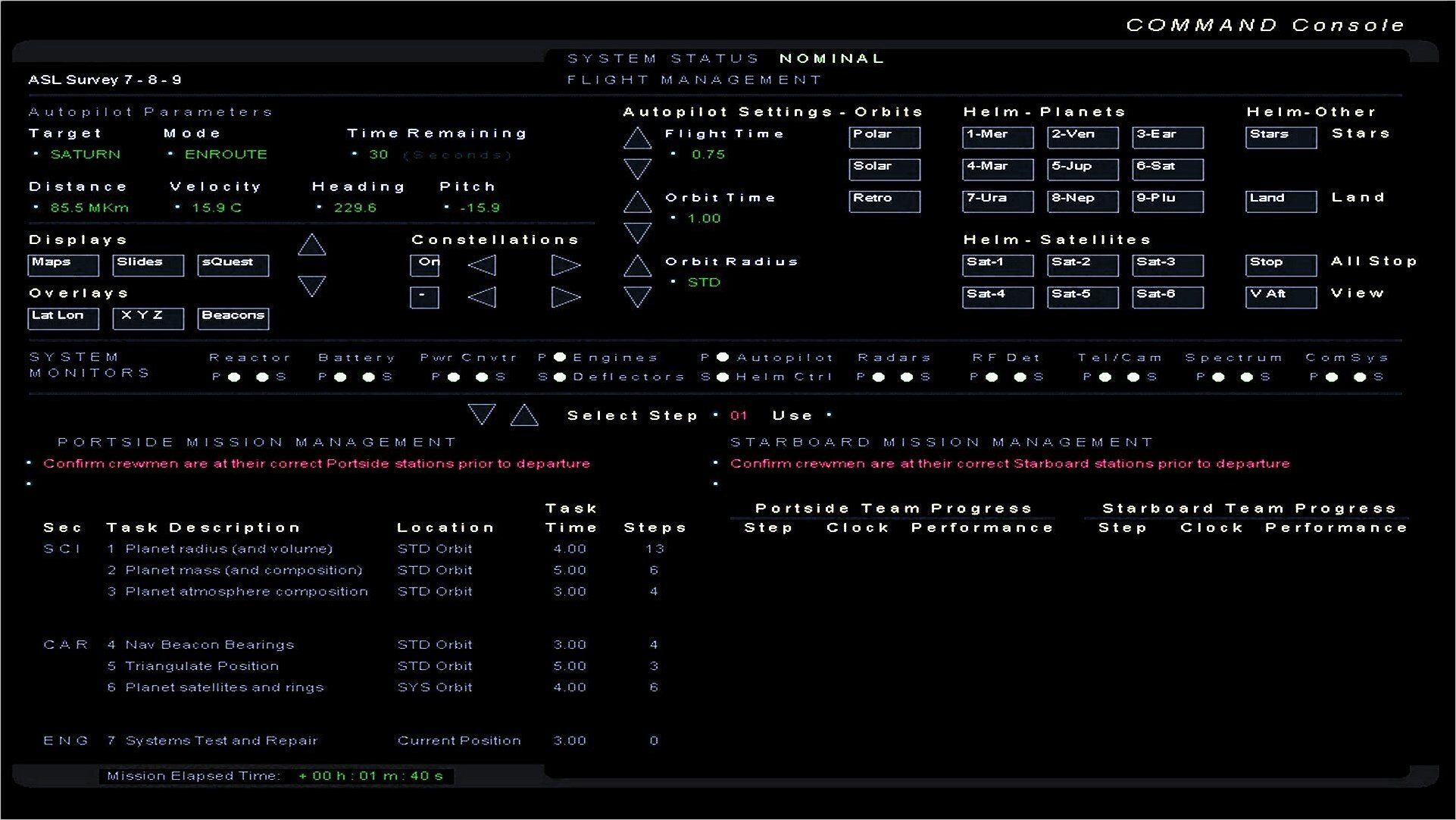
Flight Management and Data Display Controls
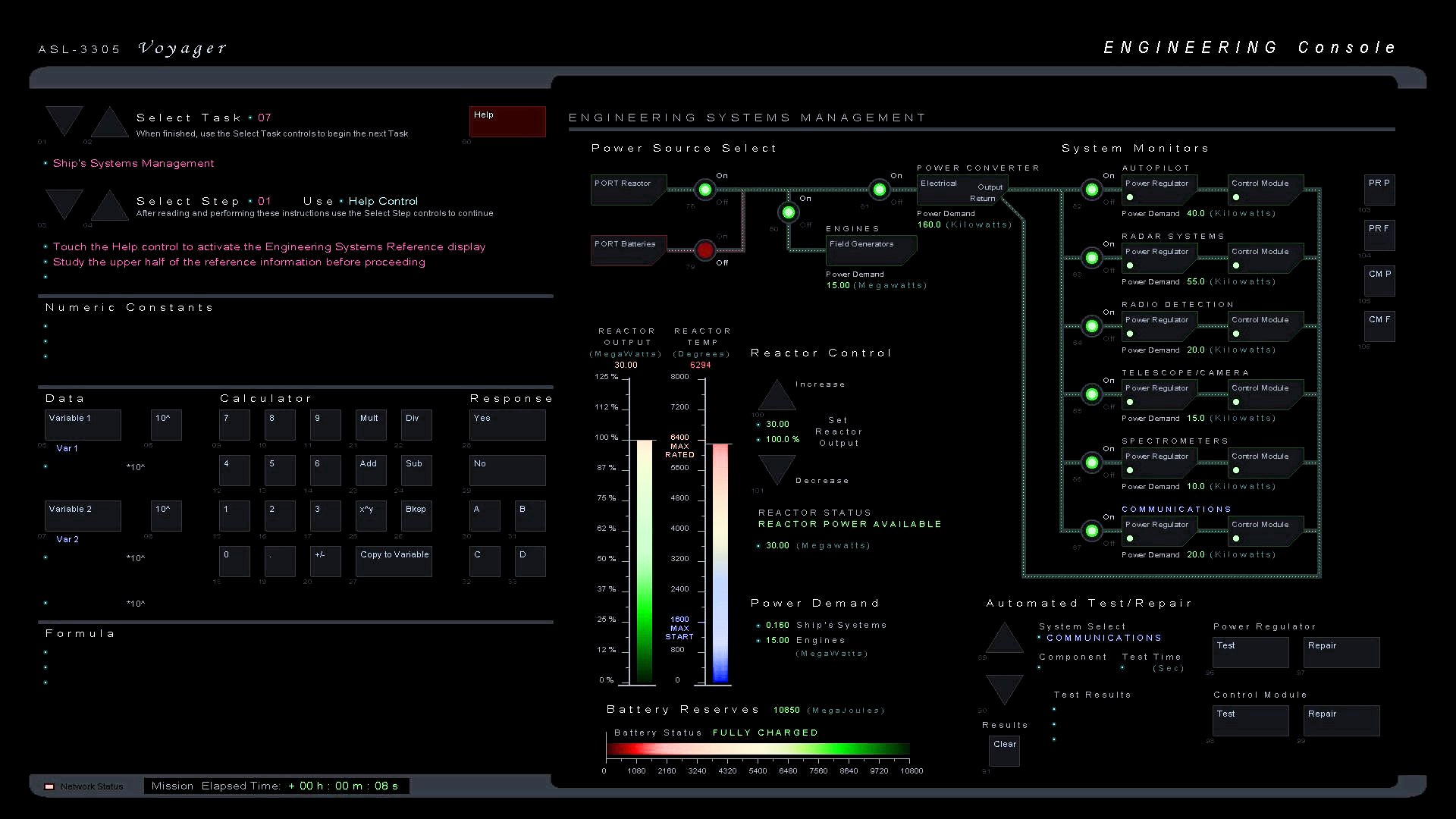
Ship’s Power, Control and Repair Management System
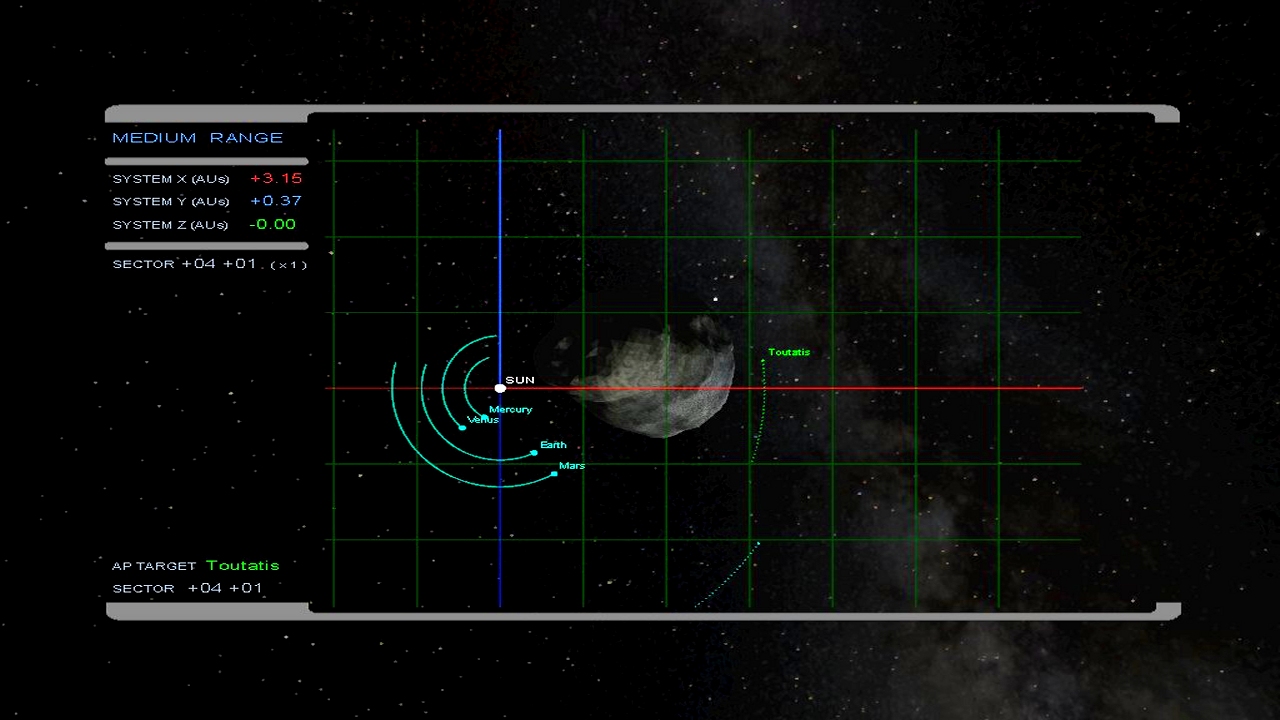
Main View Screen – Orbiting an asteroid with Map data overlaid
Science and Cartography
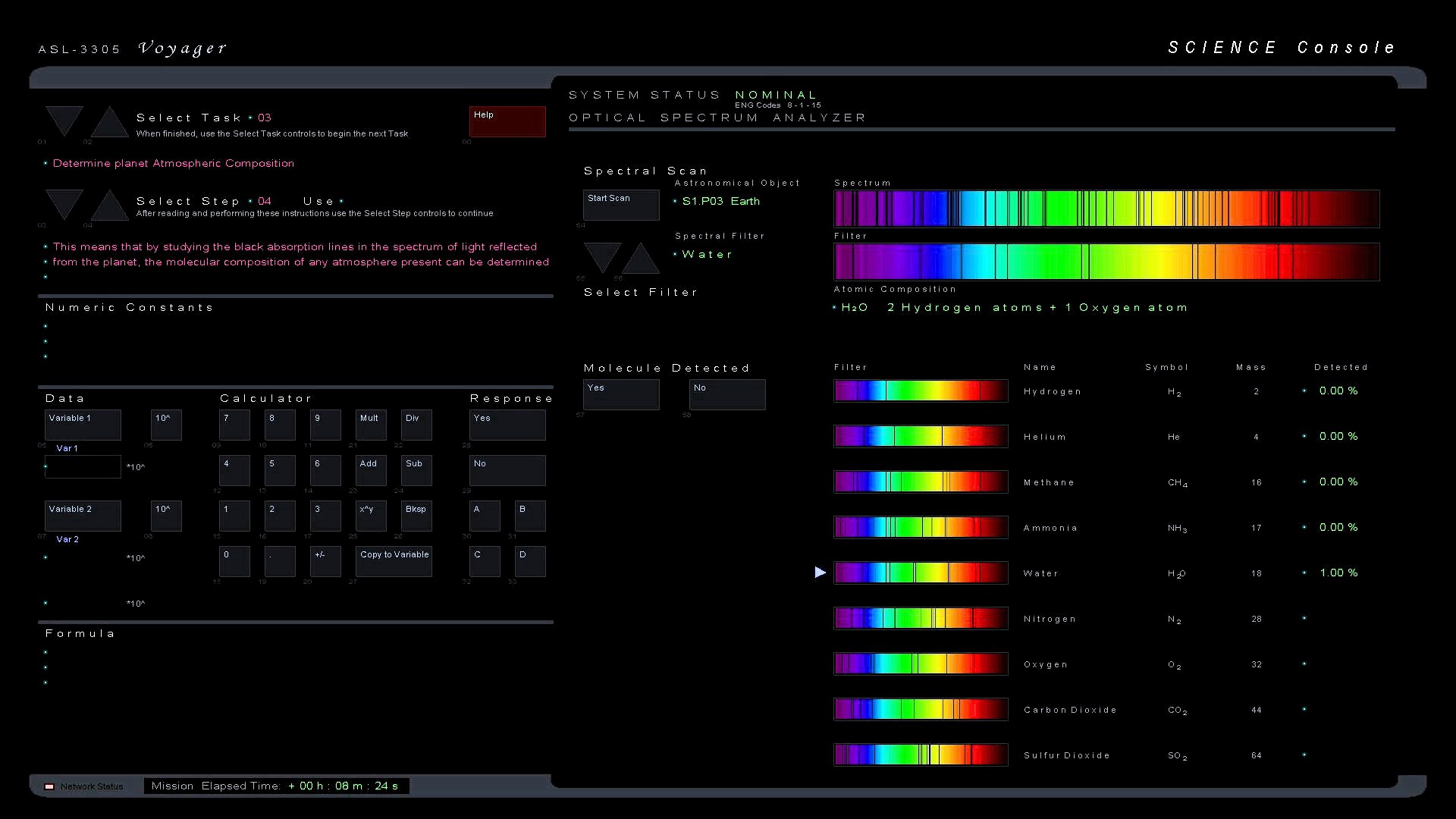
Spectrometers for Analysis of Planetary Atmospheres
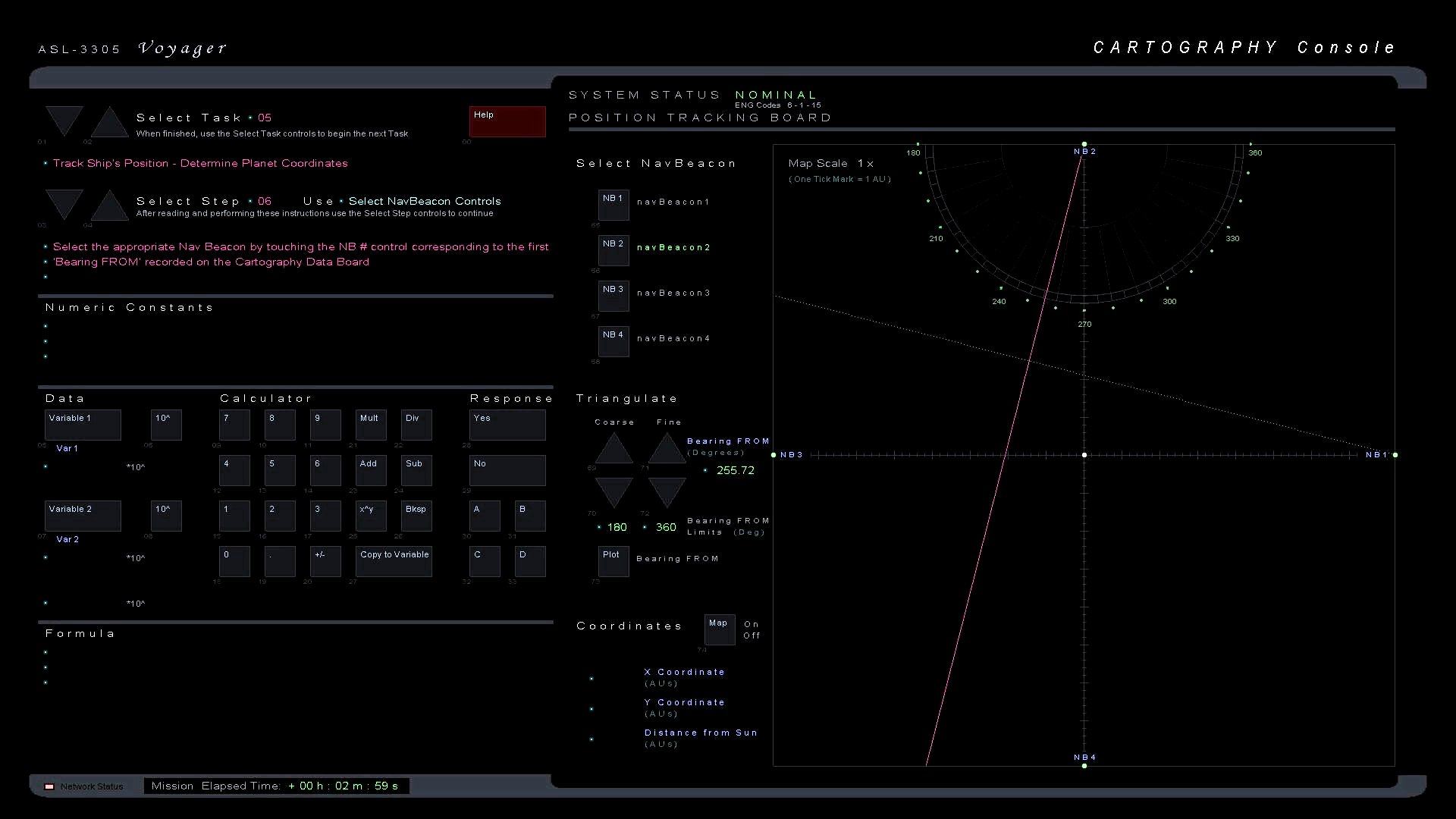
RF Detection for Triangulating Position
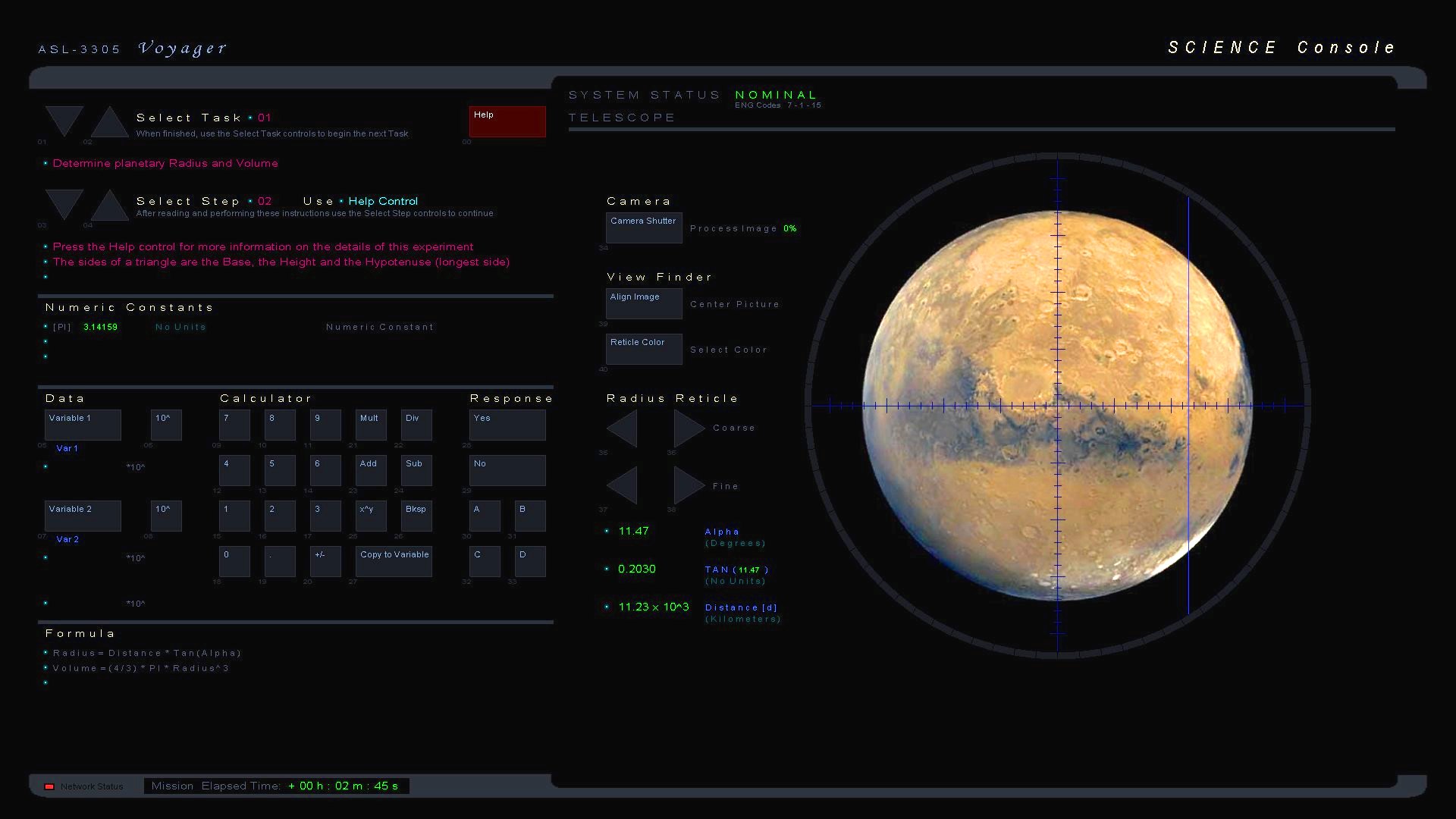
Telescope with Reticle for Measuring Planet Size
Standard Functionality
ASL Simulators create a realistic immersive learning environment that accurately positions and renders the planets, stars and the Milky Way galaxy on the simulator’s main view screen. They produce a time accurate 3-dimensional model of the Solar System through which students may fly their spacecraft on missions of exploration and discovery.
Though the student interfaces may appear complex, elementary school aged children successfully fly the ship and conduct the various on-board experiments. This is due to the step by step instructions built into each interface that guide students through the activities available on the simulator.
ASL Systems Controls & Experiments include:
- Flight Controls including Helm controls that select flight destinations and Autopilot controls that set various flight and orbit parameters.
- Data Displays that present a variety of information including:
- Maps of the Solar System (with various scales)
- Lesson-specific lecture slides
- Automated sensor scans showing planet data
- Astronomy data including constellations and bright star names
- Displays to support reading, a trivia game, and quizzes
- Engineering Station to manage vehicle control systems including the Flight and Experiments stations.
- Vehicle reactor power management
- Sub-systems power and control module circuit breakers
- Automated power and control module repair systems
- Satellite launch and communications
- Cartography Station for locating objects in space
- Radio Frequency Detection system for triangulating locations
- Wide-Area Radar for detecting planetary satellites
- Science Station for conducting planetary surveys
- Telescope with a Radius Reticle for measuring planet radius and volume
- Precision Radar to measure gravitational acceleration and planetary mass
- Absorption Spectrometer for identifying atmospheric composition
Additional system functionality includes
- Scripting Language for programming lessons and automated flight operations
- Streaming with 3 stream sources and bi-directional communications
- Main View Screen
- Command Station (Pilot) view
- Cabin view showing the vehicle’s entire interior
- Operator support features
- Basic lecture notes for each planet
- Mission-specific operator instructions